



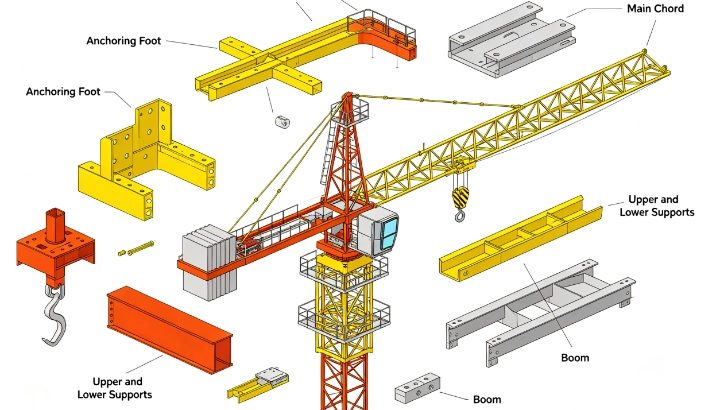
Tower crane
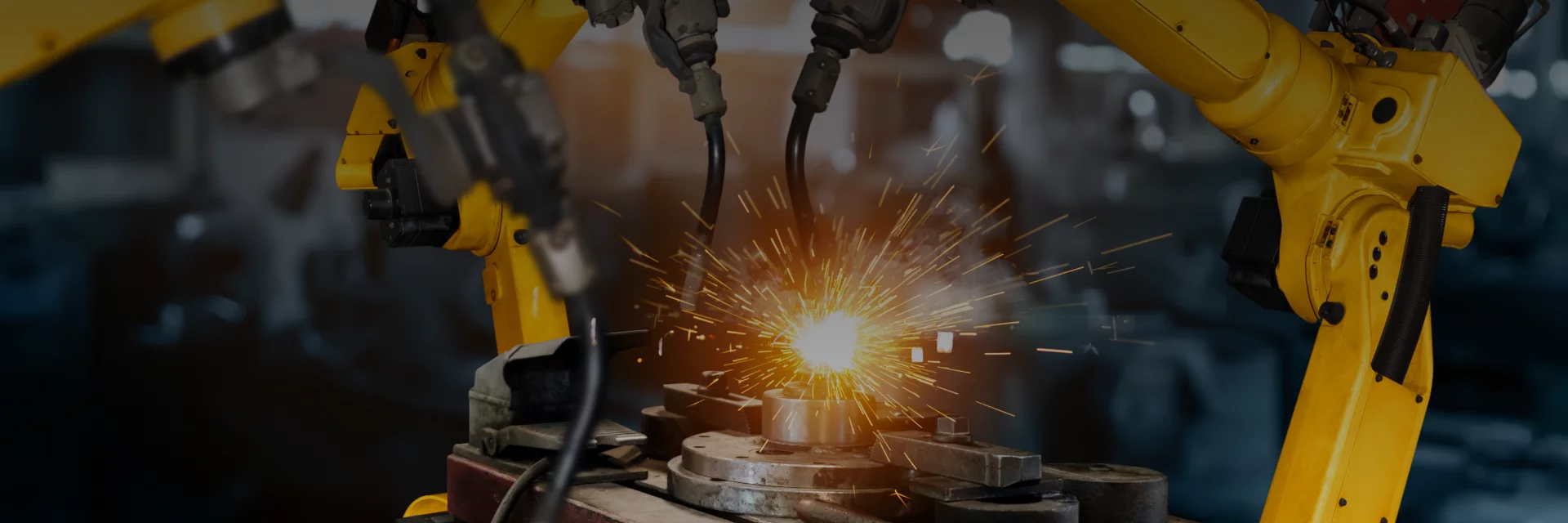
The company has developed a range of related technologies, including teach-free automatic positioning and welding systems, multi-layer multi-pass welding systems, automatic cutting systems, and omnidirectional welding positioning systems. Furthermore, by optimizing existing client production processes and integrating the automatic positioning and welding systems, the company has successfully achieved automated welding operations.
-

Flexibility
Staff will make a production analysis of the customer’s future production needs and goals. Material flow analysis and planning define the optimal configuration and layout for your site.
-

Rhythmicization
Remote repair service enables instant visual connection to the machine despite its geographical location.
-

Intelligentization
Full range of spare and wear parts, including original spare parts, retrofit parts, and approved replacement OEM parts, all meeting the strictest quality criteria.
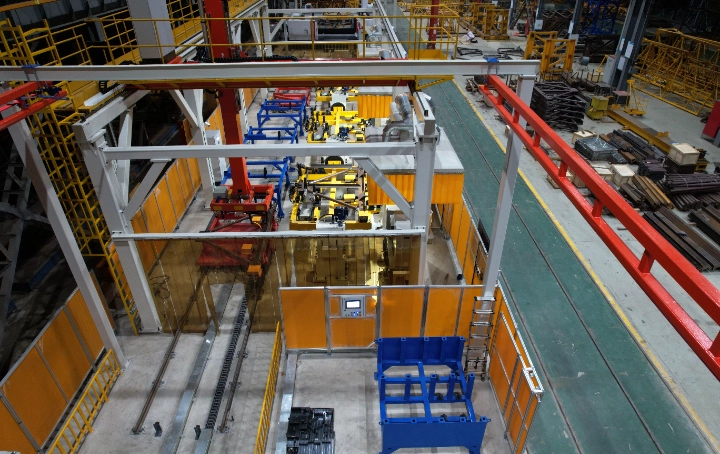
Overall Layout and Flow of the Production Line
The typical process flow is as follows
-
 01
01Raw Material Pretreatment
-
 02
02Part Cutting and Beveling
-
 03
03Alignment and Positioning
-
 04
04Robotic / Manual Welding
-
 05
05Post-Weld Slag Removal and Correction
-
 06
06Nondestructive Testing
-
 07
07Shot Blasting for Rust Removal
-
 08
08Proceed to Machining / Painting
Overview of the Standard Section Welding Production Line
The automatic welding production line for tower crane standard sections is an intelligent, full-process welding manufacturing system specifically designed for the core load-bearing components (standard sections) of tower cranes. It integrates robot welding, precision fixtures, automatic logistics, intelligent detection and information management technologies, enabling the automatic assembly, welding and circulation of standard sections from the main chord members, diagonal members, connection sleeves to the assembly. It addresses the problems of low efficiency, unstable quality and high labor intensity in traditional manual welding, and is the core equipment for tower crane intelligent manufacturing.
|
The production lines mostly adopt linear or U-shaped streamlined layouts, ensuring smooth logistics and compact workstations.
The automated welding production line aims for high quality, high efficiency, low consumption and flexibility, and achieves the following:• Stable quality: The robot welding trajectory is precise, the weld seam consistency is good, and the one-time qualification rate can reach over 99%.
• Efficiency improvement: The entire process is automated, significantly shortening the single production cycle, and suitable for large-scale production.
• Cost reduction and efficiency increase: Reducing reliance on human labor, reducing welding deformation, rework, and labor costs.
• Intelligent traceability: Real-time collection of production data, achieving full-process traceability of welding parameters, equipment status, and quality information.
|
|
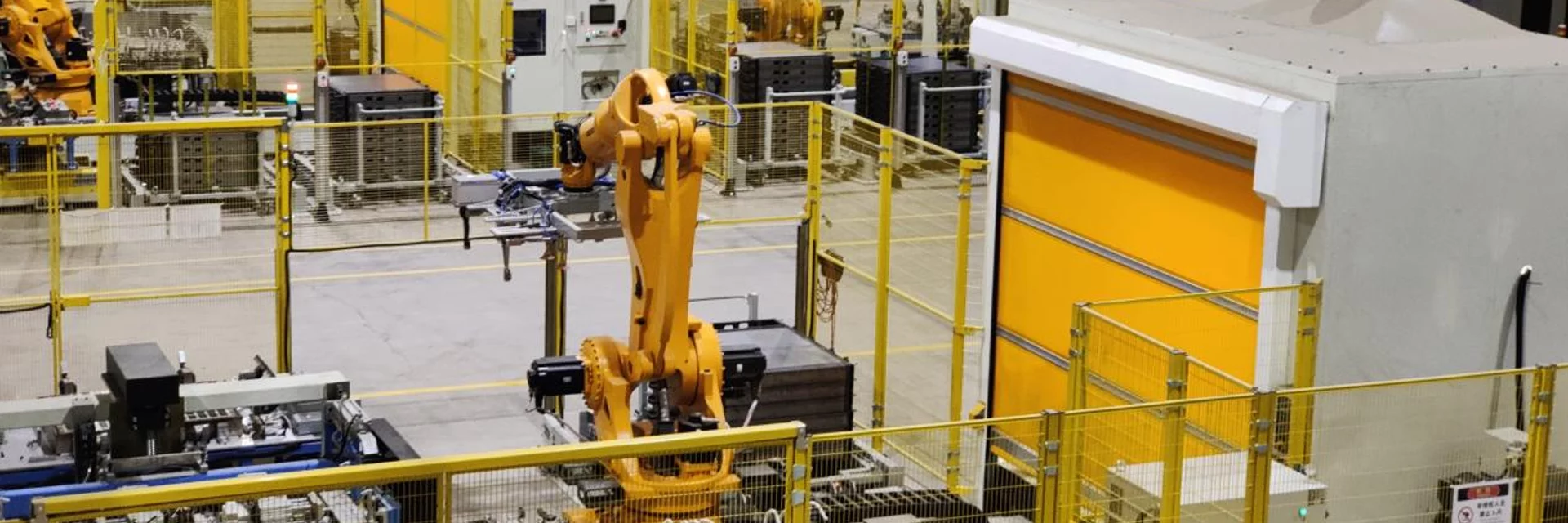
Overview of the Chip-Type Main String Rod Robot Welding Workstation
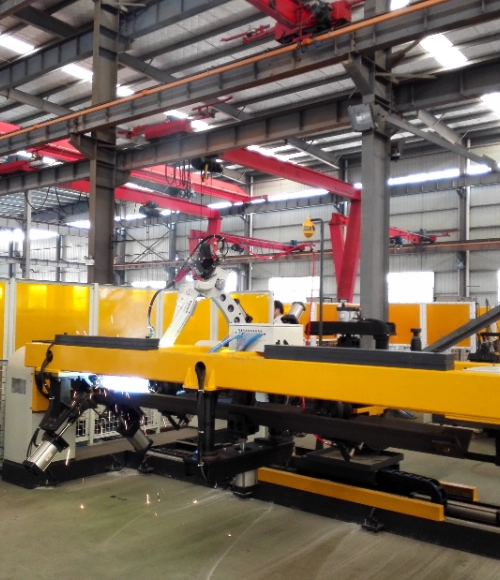
Automated welding for the main tension rods of the plate-type standard sections
-
 01
01Process advantages
The special centering fixture provides precise positioning, effectively controlling the bending and twisting deformation of the main string rod, and ensuring that the total length and coaxiality meet the standards.
-
 02
02Automatic Fixture
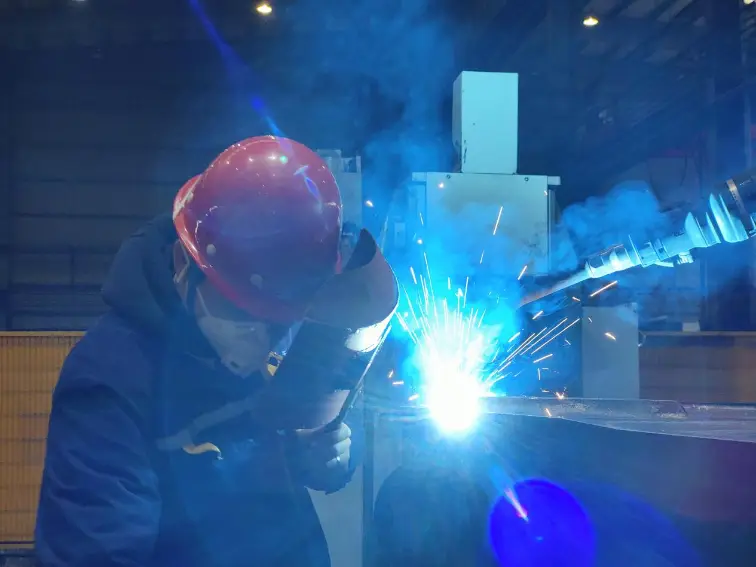
The fixture utilizes an automatic design—specifically, a pneumatically and electrically controlled system—to reduce the operator's physical workload.
-
 03
03Modular Design
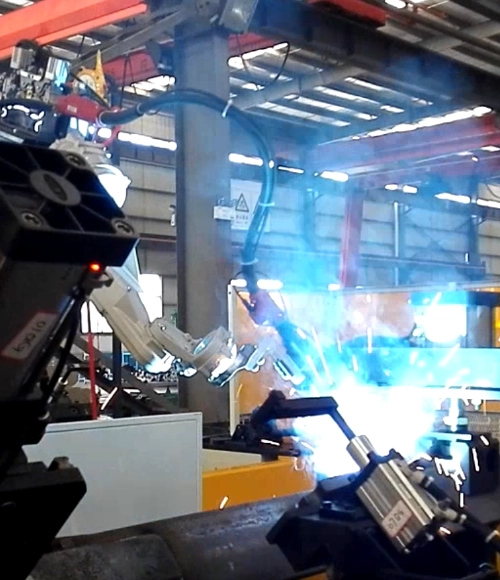
The equipment has strong compatibility and can quickly switch between different cross-sections and lengths of main string rods. The degree of flexible production is high.
Overview of Automated Welding of Upper and Lower Supports
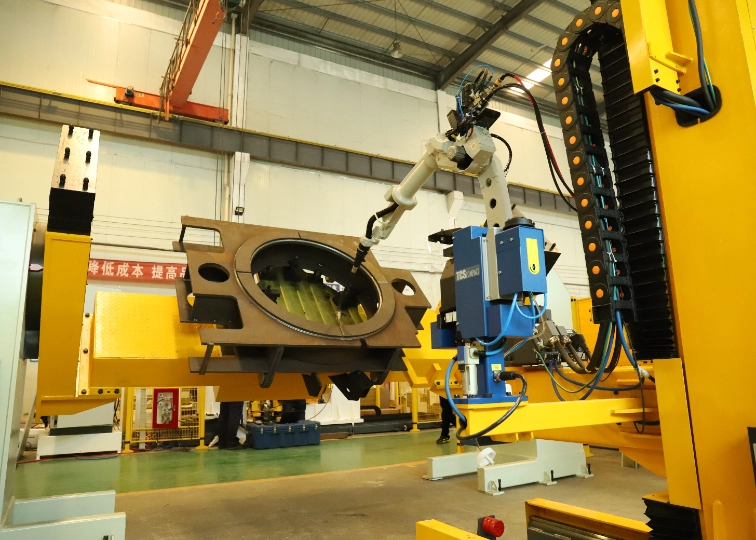
The main task is to precisely assemble and conduct automated welding for components such as the base plate of the support, the cylinder body, the flange plate, the reinforcing ribs, the hinged ear plate, and the connection seat. This ensures the bearing strength, connection accuracy, and rotational stability of the support. It is a key manufacturing position that ensures the force connection of the entire tower crane.
-
1. Integrated Assembly and Welding Fixture
By using a dedicated hydraulic positioning tool, the positions of each component are precisely locked. The flatness, coaxiality and installation hole position accuracy are strictly controlled to ensure the interchangeability of the entire machine assembly.
-
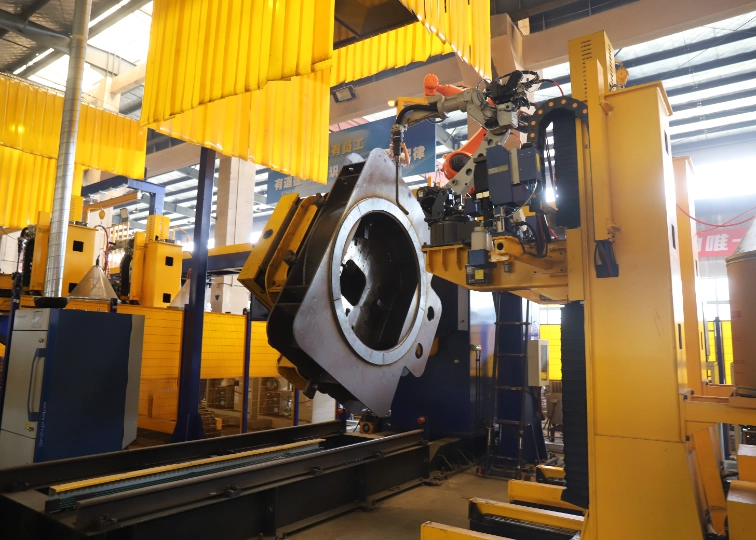
2. Improve production efficiency
Using the rotary machine, the workpiece can be rotated at multiple angles, enabling fully automatic welding in all positions (flat welding, corner welding, and vertical welding), thereby eliminating the quality variations caused by manual welding.
-
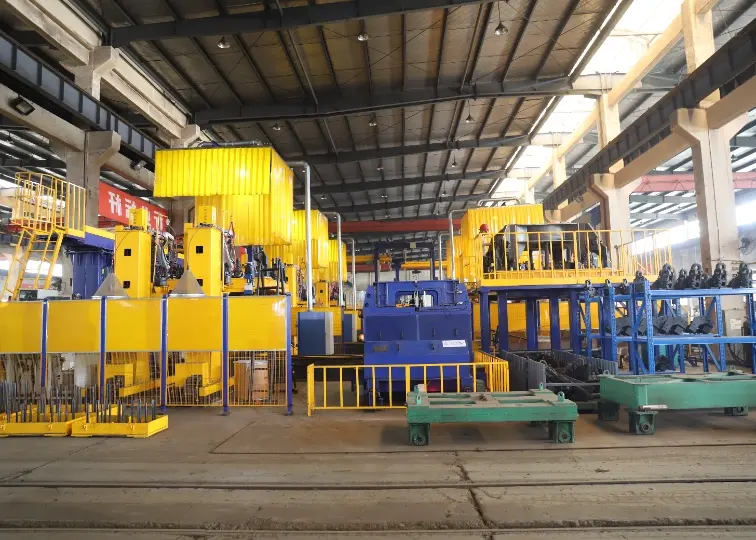
3. Flexible Design
The production line has strong flexibility and can be adapted to switch between different tonnage and different specification tower crane upper and lower supports for production, and is suitable for batch standardized manufacturing.
-
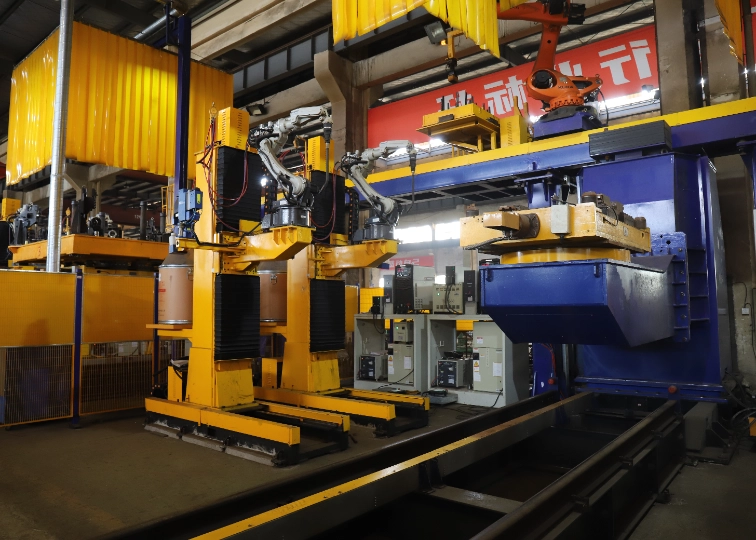
4. Lean Control of Welding Cycle Time
By using the multi-layer and multi-pass welding process with carbon dioxide gas protection, the weld seam has sufficient penetration depth and regular shape, and exhibits excellent resistance to impact and fatigue.
Lifting Arm Overview
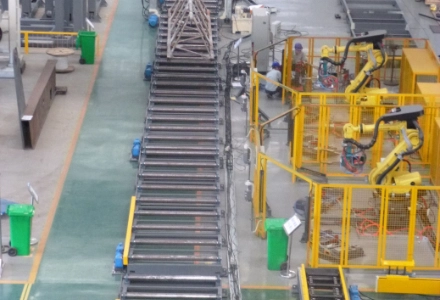
Automated welding production line for tower crane boom
-
Core advantages of the process
The position of the components is fixed by using a dedicated positioning tool, which effectively prevents the arm frame from twisting, bending or deforming. This ensures uniform product dimensions and high interchangeability.
-
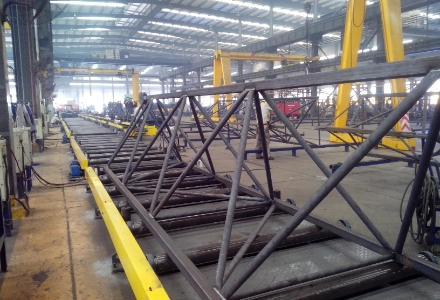
Robotic Welding Station
Single-Station Manual Component Assembly (Manual Part Placement, Robotic Spot Welding)
-
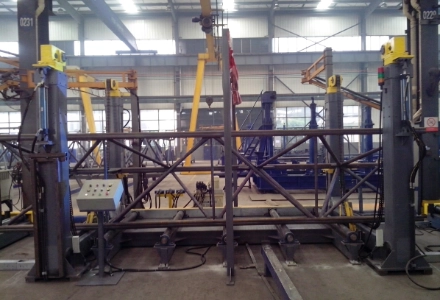
Improve production efficiency
Welding data is fully retained throughout the process, with stable and controllable process parameters, enabling quality traceability throughout the production process.
-
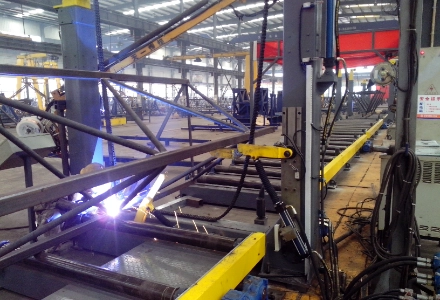
Flexible Platform Design
The welding fixture features a flexible platform design, enabling compatibility with various machine models for the welding workpieces.
The Results We Have Achieved
Established in 1992, Tianyi welding has undergone over 30 years of vigorous development to become a comprehensive service provider spanning the entire welding industry chain, integrating the six key elements of welding quality management: Man, Machine, Material, Method, Environment, and Measurement.
-
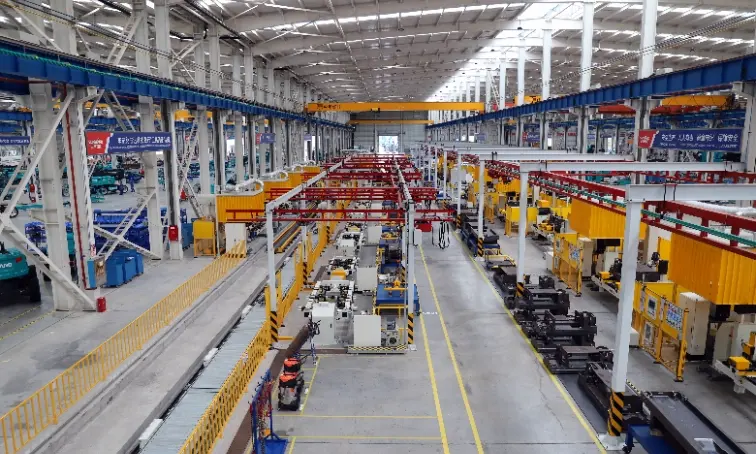
Automated welding production line for the fork and frame of the scissor-type aerial work platform
The automatic welding production line for fork rods and undercarriage frames of medium fork-arm aerial work platforms is the core manufacturing procedure for forming key structural parts of the whole vehicle. It mainly completes cutting...Learn More -
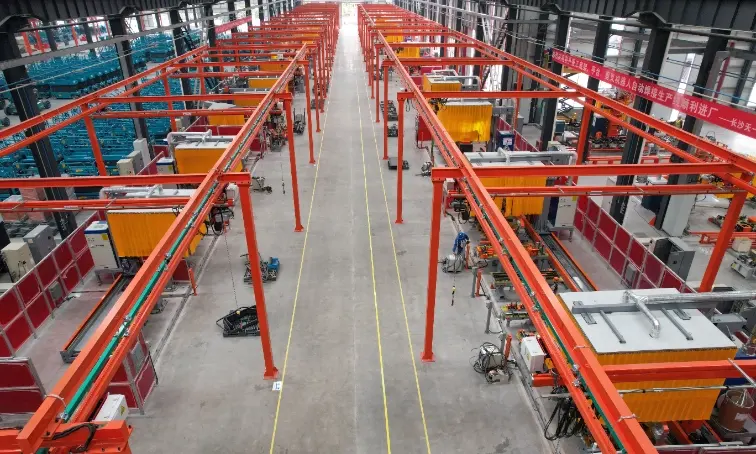
Automated welding production line for aerial work platforms
The welding production line for aerial work platforms (including scissor-type, straight-arm type, and curved-arm type) is the core manufacturing process for forming the entire machine's structural components. It mainly completes the pro...Learn More