


Excavator
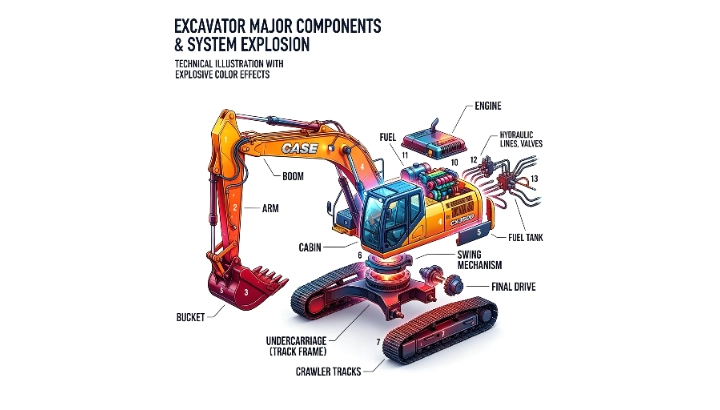
The welding production line for excavators is mainly used to manufacture core load-bearing structural components such as the boom, bucket arm, bucket, slewing platform, chassis frame, X-shaped frame, and counterweight housing. It is the most technically demanding and quality-controlled stage in the manufacturing of excavators.
-

Flexibility
Staff will make a production analysis of the customer’s future production needs and goals. Material flow analysis and planning define the optimal configuration and layout for your site.
-

Rhythmicization
Remote repair service enables instant visual connection to the machine despite its geographical location.
-

Intelligentization
Full range of spare and wear parts, including original spare parts, retrofit parts, and approved replacement OEM parts, all meeting the strictest quality criteria.
Overall Layout and Flow of the Production Line
The typical process flow is as follows
-
 01
01Raw Material Pretreatment
-
 02
02Part Cutting and Beveling
-
 03
03Alignment and Positioning
-
 04
04Robotic / Manual Welding
-
 05
05Post-Weld Slag Removal and Correction
-
 06
06Nondestructive Testing
-
 07
07Shot Blasting for Rust Removal
-
 08
08Proceed to Machining / Painting
Overview of the Automated Welding Workstation for Excavator Model X
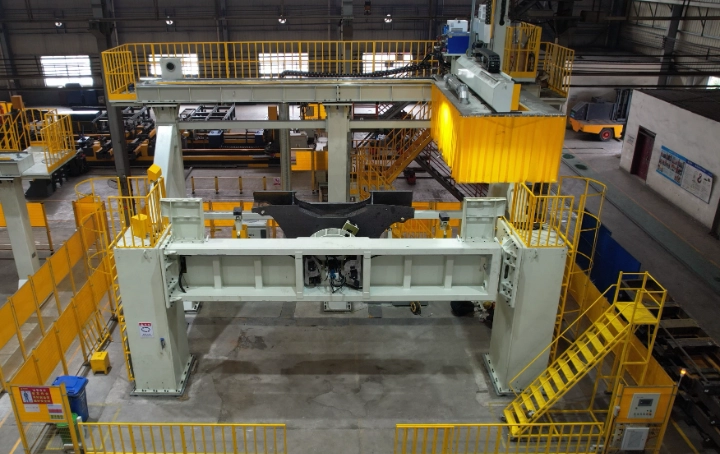
The excavator X frame serves as the core load-bearing structure of the chassis, connecting the left and right track frames with the slewing base. All the walking loads and excavation impacts of the entire machine are borne and transmitted by it. The structure has complex forces and extremely high requirements for welding accuracy and strength. This automated welding workstation is specially designed for the X frame of the excavator, enabling precise assembly and fully automatic welding of components such as the main beam, cross beam, reinforcement plate, hinge seat, and connecting ear plate of the X frame. This effectively solves the problems of large deformation, uneven welds, and low efficiency in traditional manual welding, achieving intelligent and standardized production of the X frame welding process.
|
This workstation not only enhances production efficiency but also ensures the structural strength and overall stability of the vehicle frame from the very beginning, thereby extending the service life of the entire machine.
The production line adopts a streamlined layout. The equipment has a high degree of integration and strong automation. The core equipment consists of the following:•The dedicated integral locking tooling provides stable positioning and effectively controls the overall twisting and lateral bending deformation of the X-frame.
• Equipped with a rotary table, it enables the workpiece to be rotated at multiple angles, allowing for full-position welding in flat, corner and vertical positions.
• Combined with real-time tracking of weld seams, it automatically corrects the welding trajectory, ensuring sufficient weld penetration and a full weld formation.
•Welding data is stored in real time, and process parameters are fully controllable, enabling monitoring of the production process and traceability of quality.
|
|
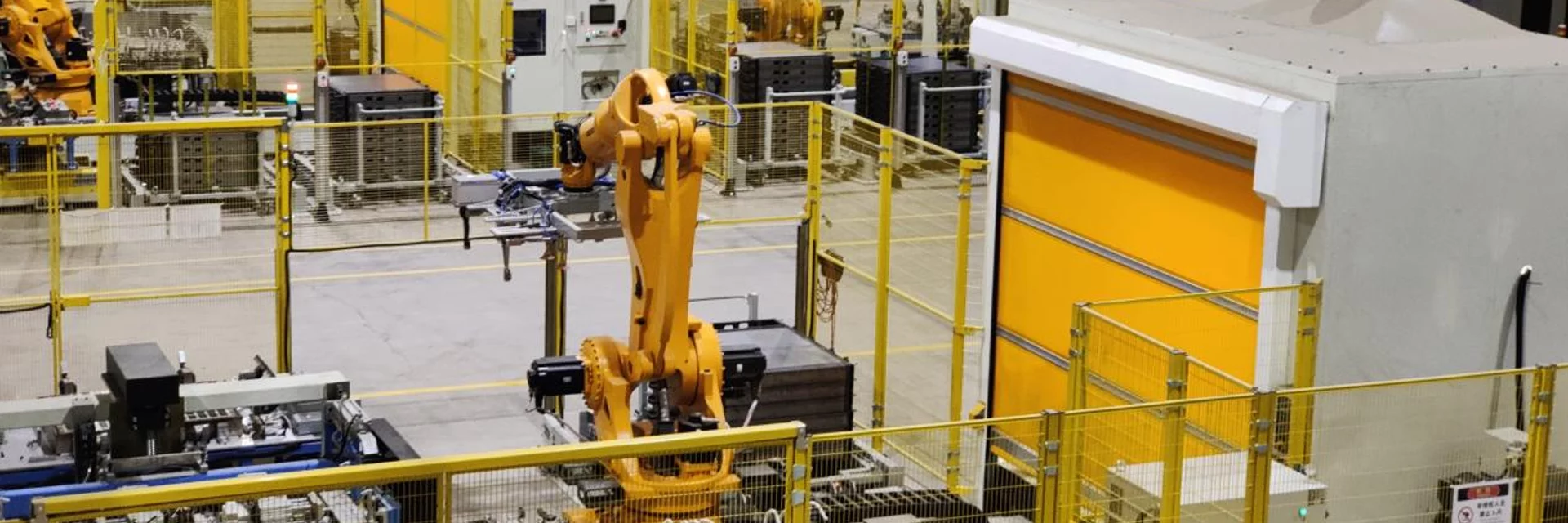
Overview of the Automated Welding Workstation for Forklift Sheets
Automated welding for forklift plates
-
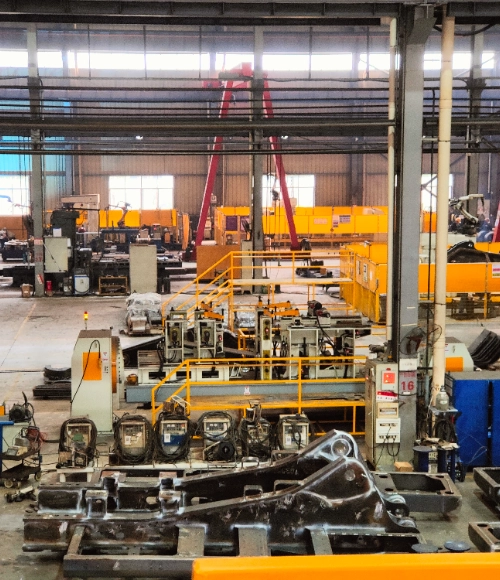 01
01Process advantages
6-axis / 7-axis heavy-duty robot, equipped with a three-axis walking mechanism, covering the entire stroke of the boom
-
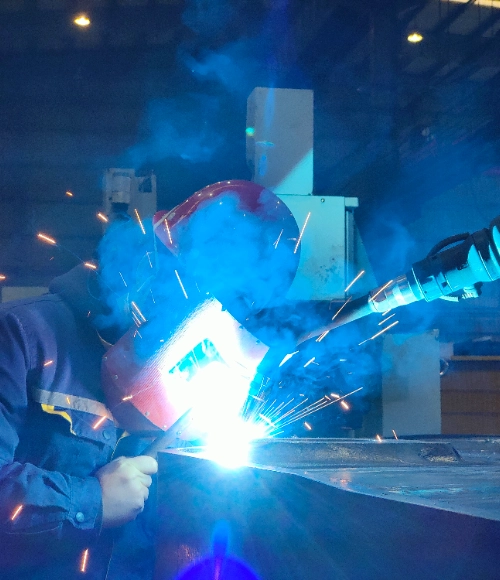 02
02Automatic Fixture
Suitable for thick plate deep penetration welding, and supports automatic path arrangement for multiple layers and multiple passes.
-
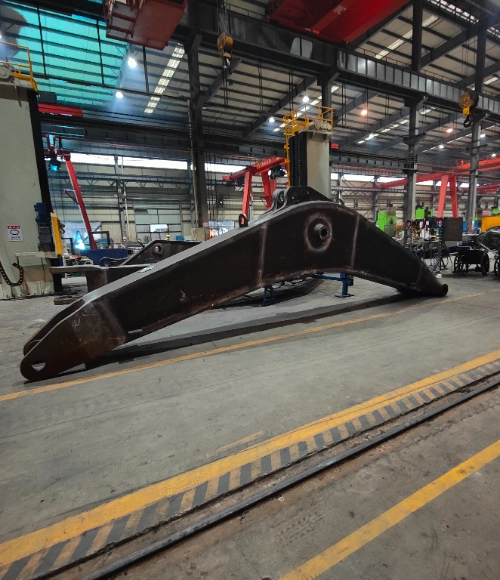 03
03Modular Design
Quickly switch between different specifications of cranes to meet the requirements of multi-variety and small-batch production.
Overview of the Automated Welding Workstation for the Excavator Turntable
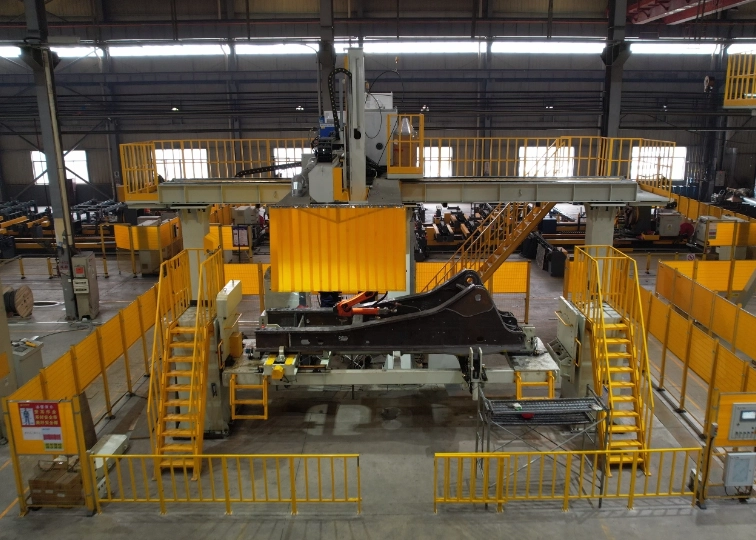
This automated welding workstation is specially developed for excavator turntables. It integrates precise fixture positioning, heavy-duty welding positioning equipment and multi-joint welding robots to achieve fully automatic welding of all primary and secondary weld seams such as the turntable base plate, upright plate, reinforcing ribs, bearing seat, and hinge ear seat.
-
1. Integrated Assembly and Welding Fixture
After the workpiece is precisely clamped and locked, the position changer can rotate and adjust at multiple angles, so that various ring welds, vertical welds and corner welds can be adjusted to the optimal horizontal welding position.
-
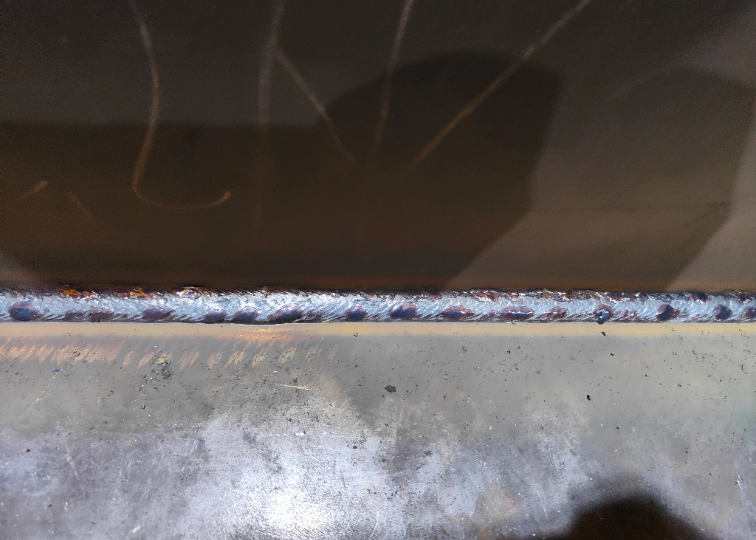
2. Improve production efficiency
The weld seams are well-formed and uniform, with a high qualification rate for flaw detection. This fully meets the standards for heavy-duty and wear-resistant, as well as fatigue-resistant usage of construction machinery.
-
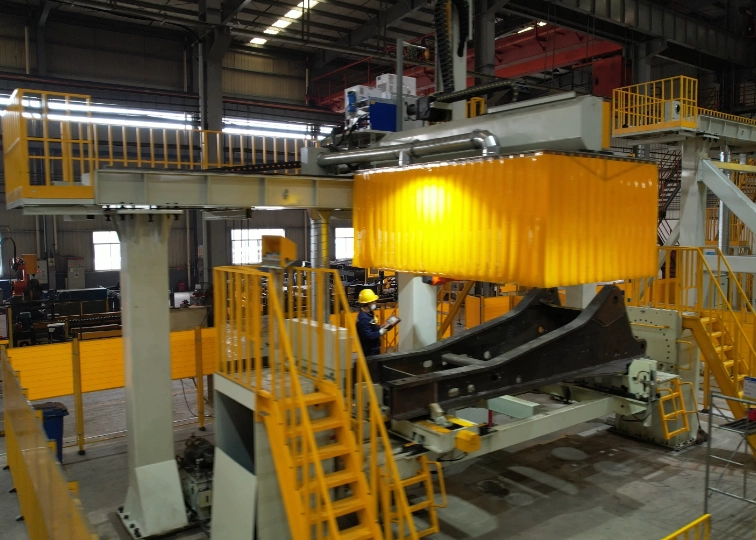
3. Flexible Design
By quickly changing the fixtures, it is possible to adapt to the flexible production of multiple types of excavator turrets, and the welding process can be uniformly standardized.
-
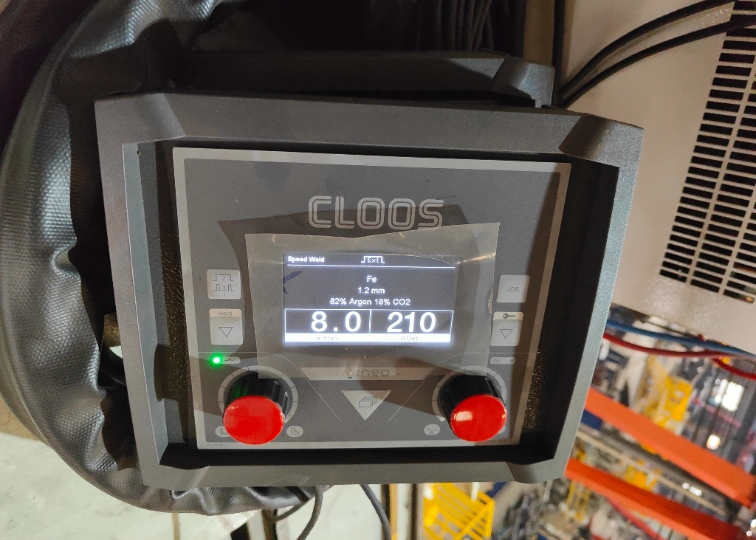
4. Lean Control of Welding Cycle Time
The heavy-duty head-tail frame welding positioner, six-axis welding robot, intelligent welding power supply, dust purification system and integrated electrical control system are all components of this equipment.
Overview of the Automated Welding Workstation for Industrial Forklift Tiers
The tail frame (also known as the counterweight frame or tail support bracket) is the "core component for tail support" of a forklift.
-
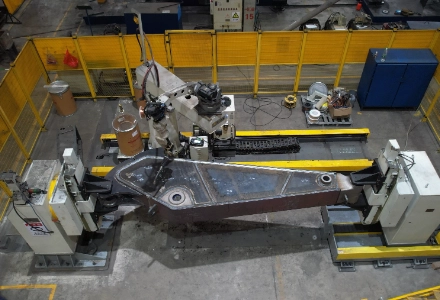
Core advantages of the process
The entire workstation operates stably and reliably, and the welding parameters can be fully controlled and traced throughout the process.
-
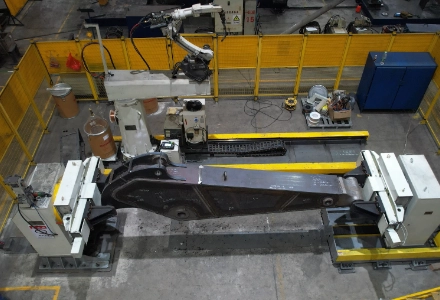
Robotic Welding Station
By adopting an efficient workstation layout, the process of clamping the workpiece and performing welding simultaneously can be completed.
-
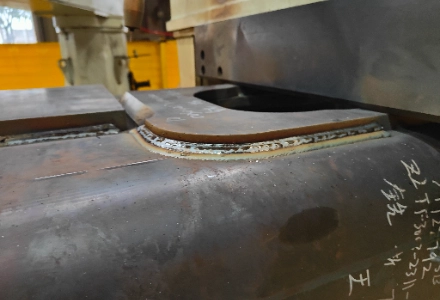
Improve production efficiency
Significantly improve product qualification rate and production cycle, widely applied in the professional manufacturing field of engineering machinery structural components
-
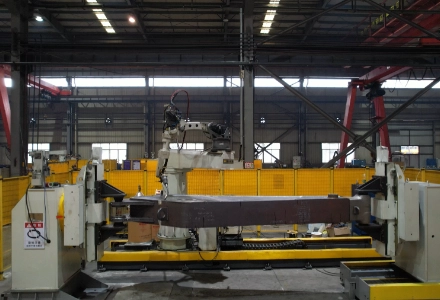
Flexible Platform Design
The precise assembly of the boom body, upper and lower cover plates, reinforcing ribs, hinged ear plates, and pin shaft seats, as well as the fully automatic welding process.
The Results We Have Achieved
Established in 1992, Tianyi welding has undergone over 30 years of vigorous development to become a comprehensive service provider spanning the entire welding industry chain, integrating the six key elements of welding quality management: Man, Machine, Material, Method, Environment, and Measurement.
-
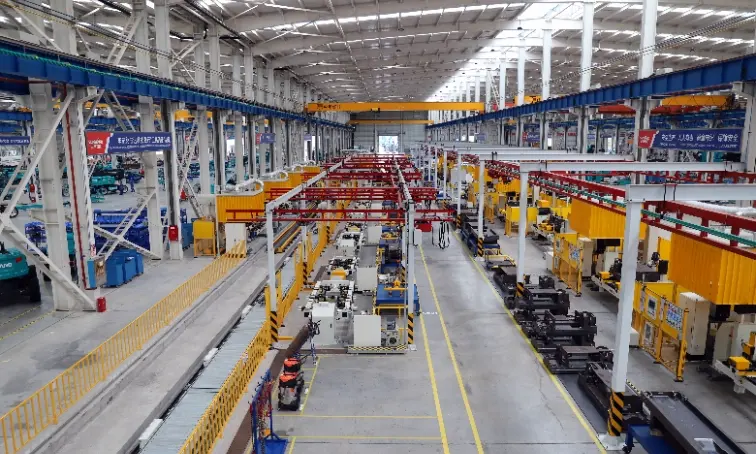
Automated welding production line for the fork and frame of the scissor-type aerial work platform
The automatic welding production line for fork rods and undercarriage frames of medium fork-arm aerial work platforms is the core manufacturing procedure for forming key structural parts of the whole vehicle. It mainly completes cutting...Learn More -
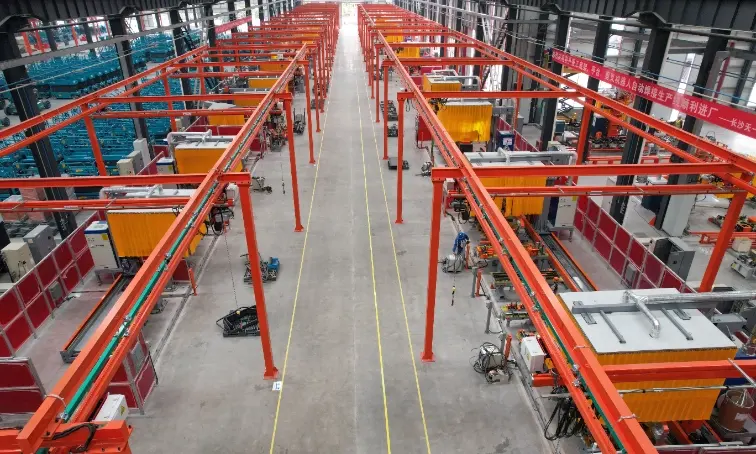
Automated welding production line for aerial work platforms
The welding production line for aerial work platforms (including scissor-type, straight-arm type, and curved-arm type) is the core manufacturing process for forming the entire machine's structural components. It mainly completes the pro...Learn More