



Construction elevator
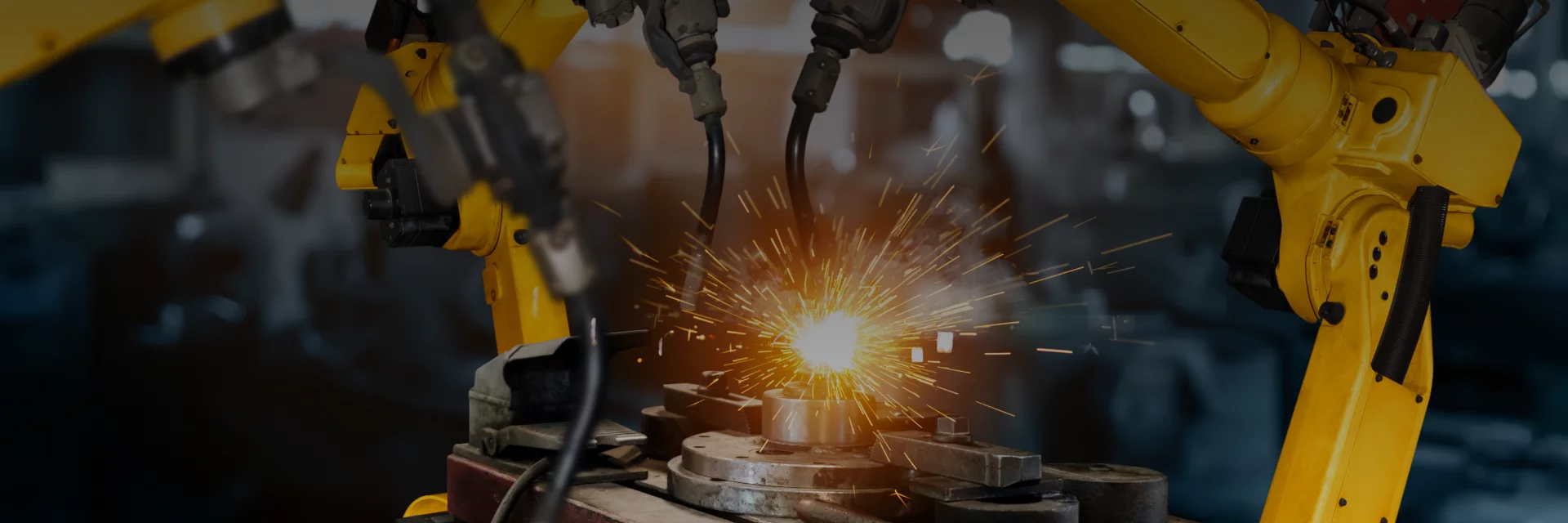
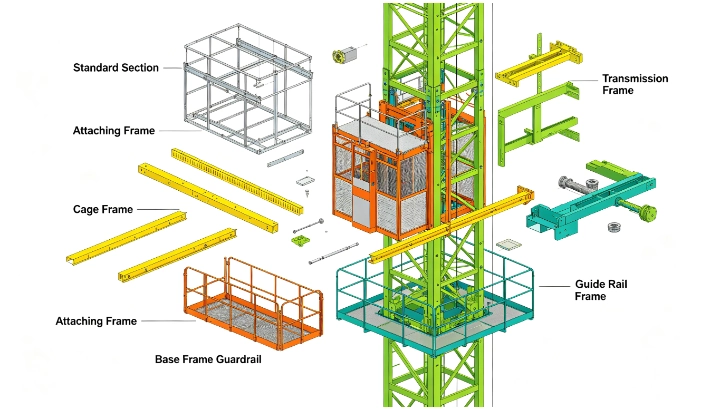
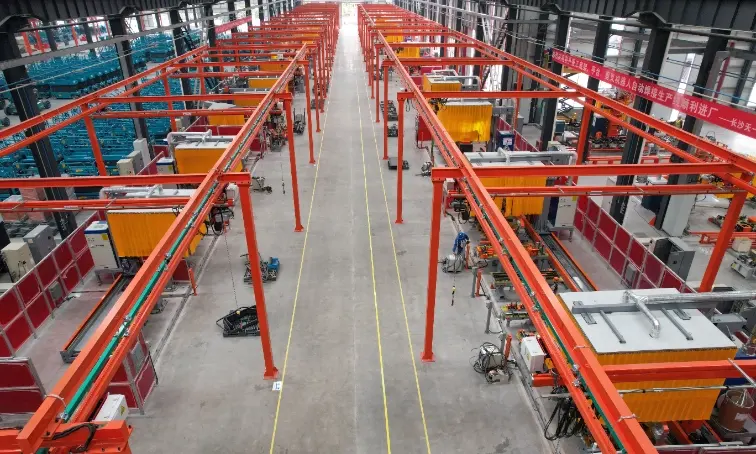
The welding production line for construction elevators (construction lifts) is mainly used for manufacturing core components such as standard sections, hoist cage frames, attachment frames, bottom frame guardrails, transmission frames, and guide rail frames. It is a crucial manufacturing process that ensures the safe operation, structural rigidity, impact resistance, and long-term reliability of repeated lifting of construction elevators.
-

Flexibility
Staff will make a production analysis of the customer’s future production needs and goals. Material flow analysis and planning define the optimal configuration and layout for your site.
-

Rhythmicization
Remote repair service enables instant visual connection to the machine despite its geographical location.
-

Intelligentization
Full range of spare and wear parts, including original spare parts, retrofit parts, and approved replacement OEM parts, all meeting the strictest quality criteria.
Overall Layout and Flow of the Production Line
The typical process flow is as follows
-
 01
01Raw Material Pretreatment
-
 02
02Part Cutting and Beveling
-
 03
03Alignment and Positioning
-
 04
04Robotic / Manual Welding
-
 05
05Post-Weld Slag Removal and Correction
-
 06
06Nondestructive Testing
-
 07
07Shot Blasting for Rust Removal
-
 08
08Proceed to Machining / Painting
Overview of the Automated Welding Workstation for the Construction Elevator Frame
The construction elevator frame (hoist cage frame) is the core load-bearing and protective structure of the construction elevator. It is an overall rectangular box-type high-strength steel structure, mainly composed of main beams, side frames, upper and lower end beams, reinforcing partitions, guide rail connection plates, hinge support seats and other components welded together.
|
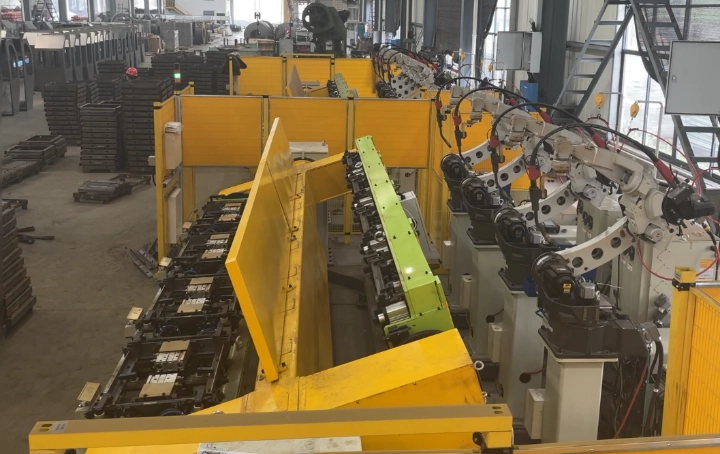
The entire production line adopts a multi-station assembly line layout, with segmented processes and coordinated operations.
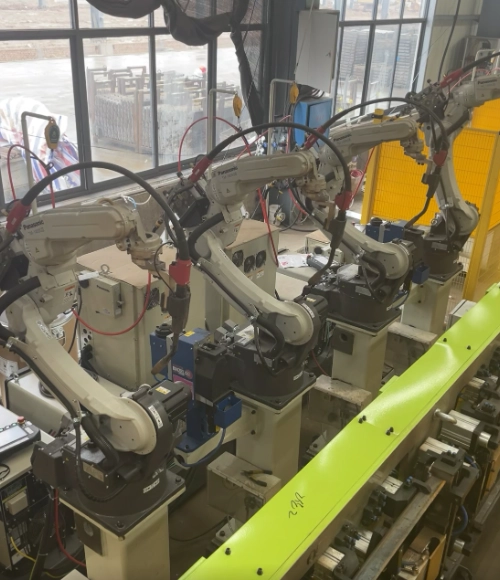
The production line adopts a streamlined layout. The equipment has a high degree of integration and strong automation. The core equipment consists of the following:•The workstation is equipped with a multi-specification construction elevator cage frame. Through program switching and tool adjustment, it can be compatible with flexible production of different height and tonnage frame products.
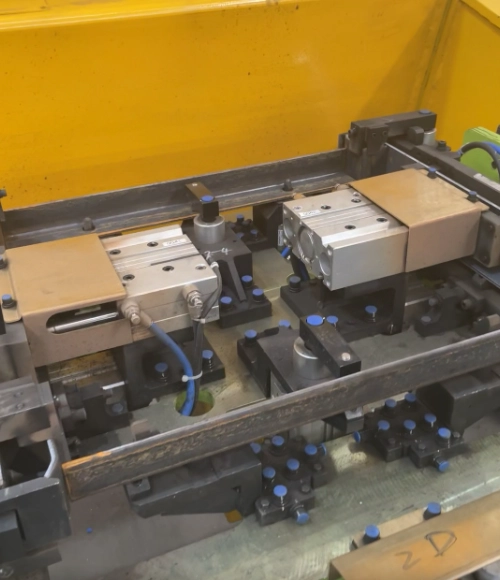
• The workstation adopts an integrated precision processing rigid reference fixture, which effectively controls the shrinkage deformation, distortion and diagonal deviation during the welding process.
• The dedicated positioning machine for equipment can enable the multi-angle flipping and fine adjustment of the frame components.
•The workstation enables the entire welding process of the construction elevator frame to be carried out automatically and in a standardized manner, with uniform and controllable welding process parameters.
|
|
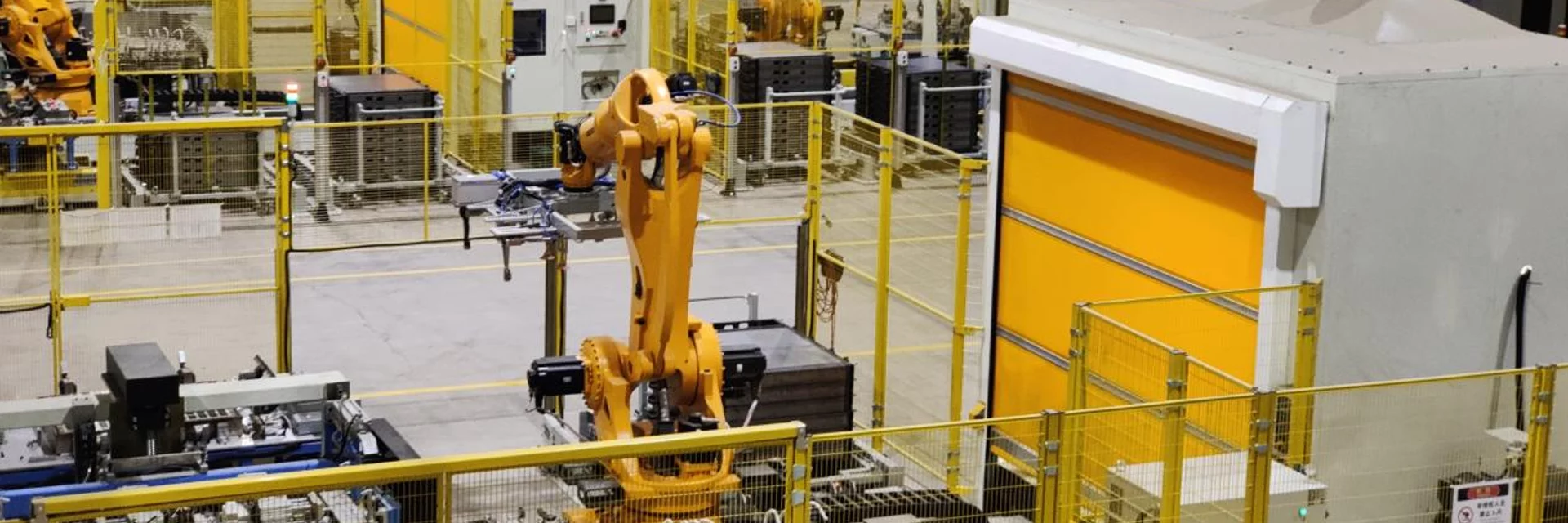
Overview of the Automated Welding Workstation for the Upper and Lower Crossbeams
Automated welding for the upper and lower beams of the construction elevator
-
 01
01Process advantages
The entire welding process parameters are digitally collected and monitored in real time.
-
 02
02Automatic Fixture
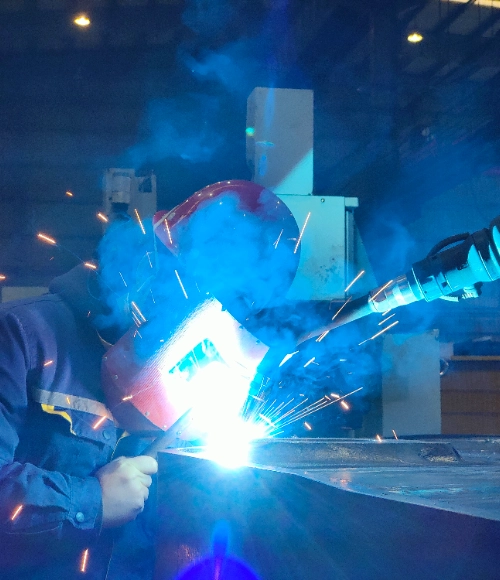
Compared with the traditional discrete production mode, the production cycle of the automated assembly line has significantly improved, greatly reducing the reliance on highly skilled welders.
-
 03
03Modular Design
Full-process automated and standardized welding operation for the construction elevator frame
Overview of the Automated Welding Workstation for Partition Boards
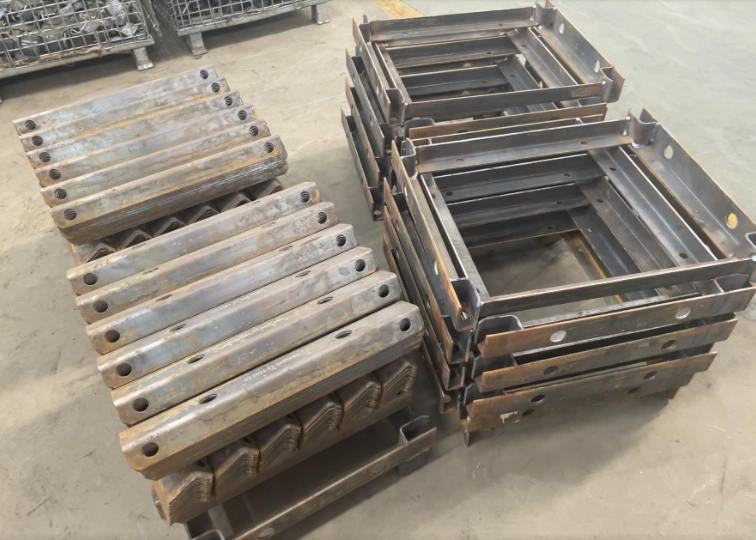
The reinforcement partition of the construction elevator frame is the core strengthening and torsional-bearing component within the elevator cage frame. It is mainly distributed inside the main beams, side frames and end beams of the elevator cage.
-
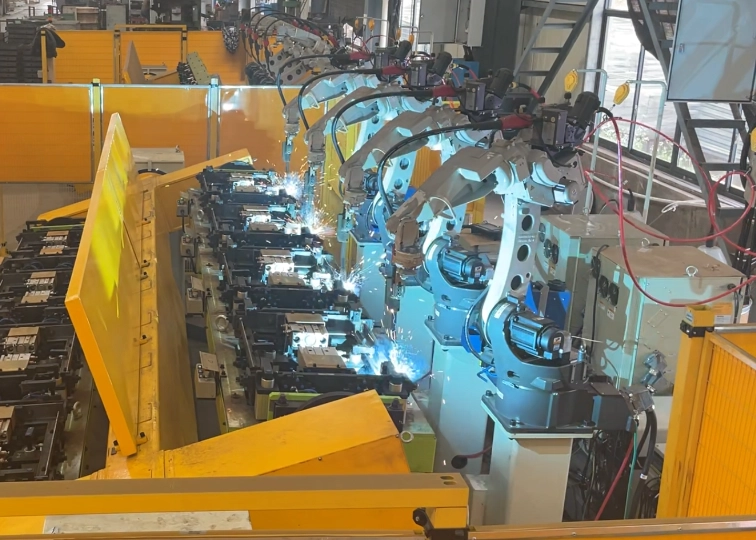
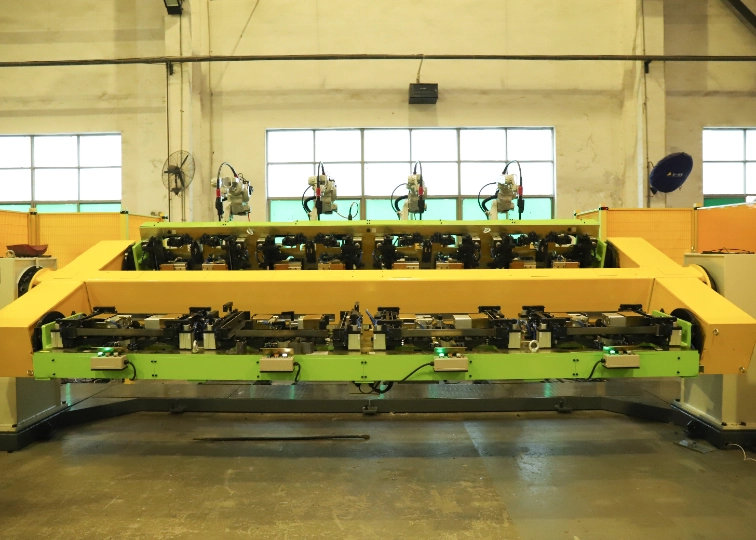
1. Integrated Assembly and Welding Fixture
The workstation is compatible with the welding production of various thicknesses and different arrangement specifications of reinforcement partitions.
-
2. Improve production efficiency
The production line can achieve simultaneous production of two pieces, significantly increasing the production cycle, reducing manual intervention by over 60%, and lowering labor costs and rework expenses.
-
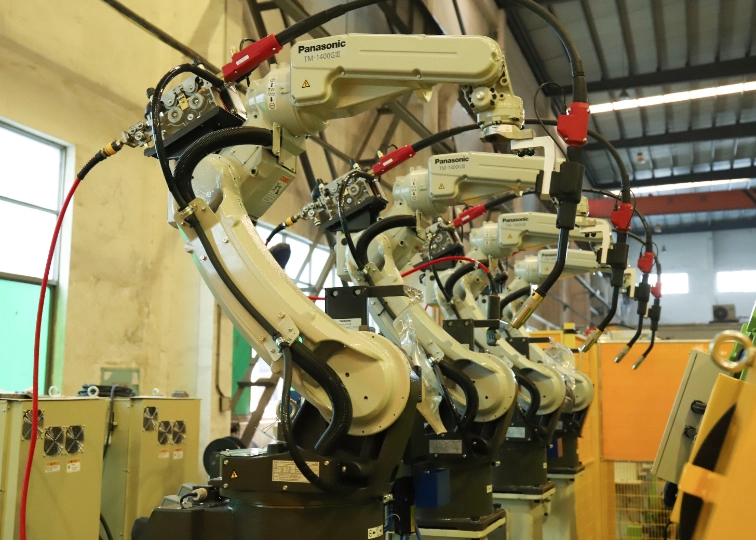
3. Flexible Design
It can automatically detect the errors of the workpiece group alignment, real-time correct the welding trajectory, and precisely control the penetration depth, weld width and weld formation.
-
4. Lean Control of Welding Cycle Time
The workstation completely replaces the manual multi-point repetitive welding operations, and the welding actions are standardized.
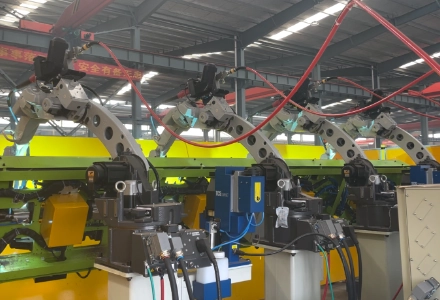
Overview of the Automated Welding Workstation for the Main Beam of the Frame
The main beam has the following technical characteristics: large length, long longitudinal continuous welds, concentrated welding heat input, and high requirements for linearity accuracy.
-
Core advantages of the process
The workstation is equipped with a customized rigid positioning fixture specifically for the long main beam, and uses an overall precision machined reference platform.
-
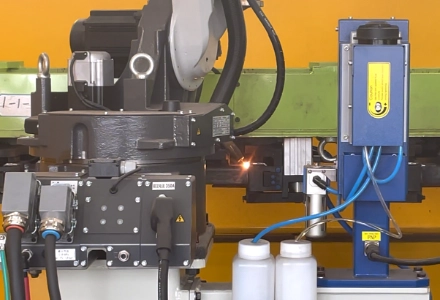
Robotic Welding Station
The dedicated long-stroke offset equipment is provided to enable the main beam workpiece to rotate smoothly in all directions within 360 degrees and to adjust its position at multiple angles.
-
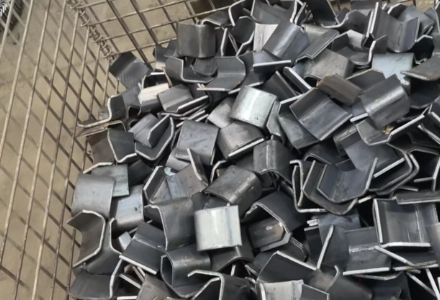
Improve production efficiency
Long weld seams, corner weld seams and lap weld seams are all adjusted to the optimal ship shape weld configuration.
-
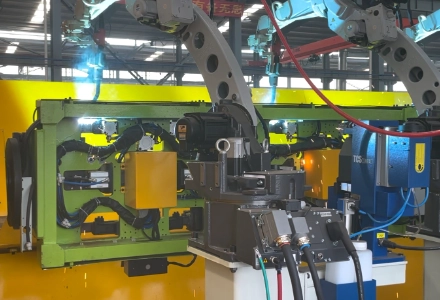
Flexible Platform Design
Adopting a low-stress, stable heat input multi-layer multi-pass welding process suitable for long beam components
The Results We Have Achieved
Established in 1992, Tianyi welding has undergone over 30 years of vigorous development to become a comprehensive service provider spanning the entire welding industry chain, integrating the six key elements of welding quality management: Man, Machine, Material, Method, Environment, and Measurement.
-
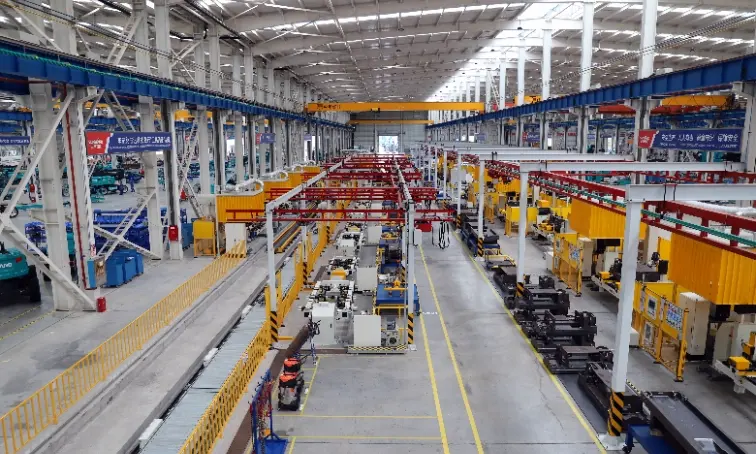
Automated welding production line for the fork and frame of the scissor-type aerial work platform
The automatic welding production line for fork rods and undercarriage frames of medium fork-arm aerial work platforms is the core manufacturing procedure for forming key structural parts of the whole vehicle. It mainly completes cutting...Learn More -
Automated welding production line for aerial work platforms
The welding production line for aerial work platforms (including scissor-type, straight-arm type, and curved-arm type) is the core manufacturing process for forming the entire machine's structural components. It mainly completes the pro...Learn More