


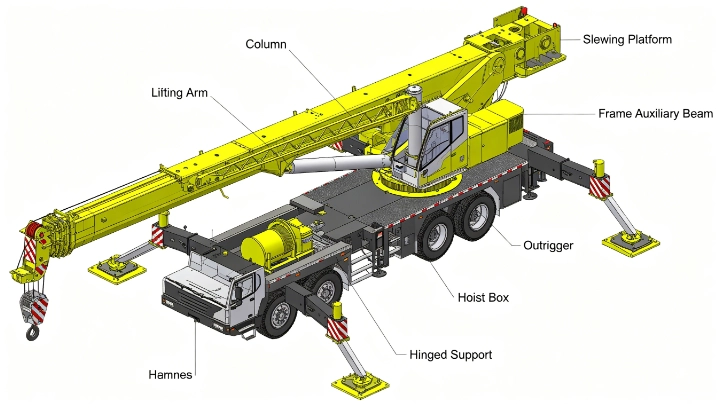
Crane truck / Vehicle-mounted crane
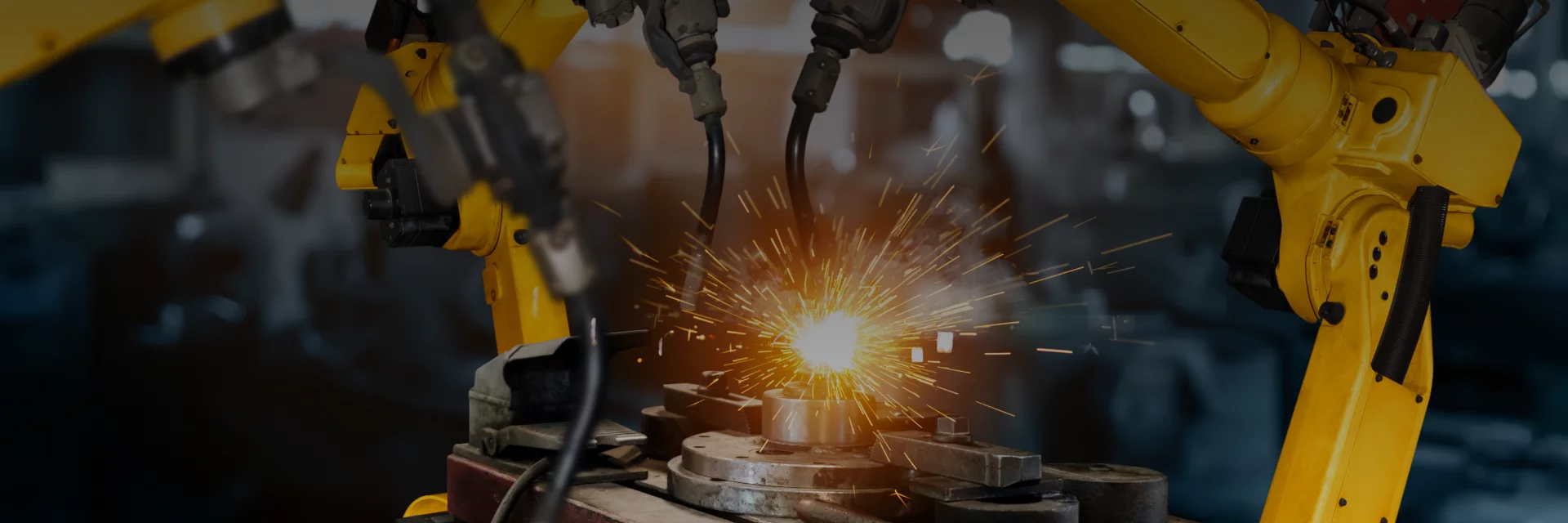
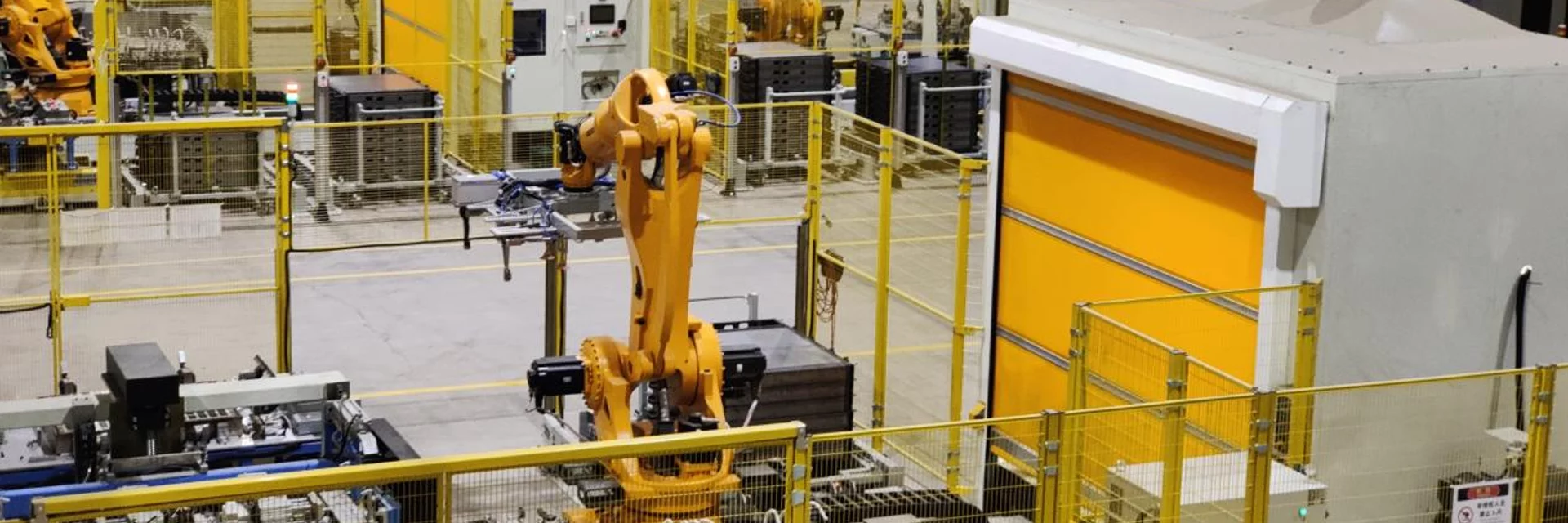
The production line is mainly used for processing and manufacturing core load-bearing structural components such as the boom, and it is a key process that determines the lifting performance of the entire machine. By adopting automated welding, it is capable of welding high-strength structural steel, meeting the complex working conditions such as frequent amplitude changes, rotation, and heavy-load lifting.
-

Flexibility
Staff will make a production analysis of the customer’s future production needs and goals. Material flow analysis and planning define the optimal configuration and layout for your site.
-

Rhythmicization
Remote repair service enables instant visual connection to the machine despite its geographical location.
-

Intelligentization
Full range of spare and wear parts, including original spare parts, retrofit parts, and approved replacement OEM parts, all meeting the strictest quality criteria.
Overall Layout and Flow of the Production Line
The typical process flow is as follows
-
 01
01Raw Material Pretreatment
-
 02
02Part Cutting and Beveling
-
 03
03Alignment and Positioning
-
 04
04Robotic / Manual Welding
-
 05
05Post-Weld Slag Removal and Correction
-
 06
06Nondestructive Testing
-
 07
07Shot Blasting for Rust Removal
-
 08
08Proceed to Machining / Painting
Overview of the Automated Welding Workstation for the Traveling Crane Turntable
The turntable is the core load-bearing structure of the entire machine. It is composed of a base plate, web plates, reinforcement ribs and support plates welded together. The weld seams are mainly of dense butt joints and对接 joints.
|
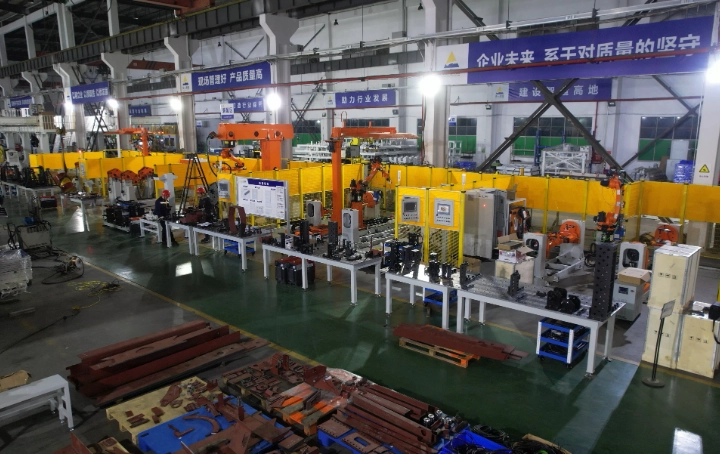
The entire production line adopts a multi-station assembly line layout, with segmented processes and coordinated operations.
The production line adopts a streamlined layout. The equipment has a high degree of integration and strong automation. The core equipment consists of the following:•Quality controllability: The weld penetration and weld leg dimensions are uniform, effectively controlling the welding deformation of the box body.
• Efficiency improvement: The welding time per unit of the rotary table is reduced by 40% - 60% compared to manual operation. With dual workstations for continuous production, the production capacity is increased by more than double.
• Flexible production: Modular fixtures + program database, suitable for multi-ton truck crane turntable in-line production, and suitable for various market orders.
•Cost reduction and efficiency improvement: Reduction in the number of experienced welders, decrease in the consumption of welding wire and protective gas consumables, and improvement of the on-site working environment.
|
|
Overview of the Automated Welding Workstation for the Chassis of the Truck Crane
Automated welding of the base of the truck-mounted crane
-
 01
01Process advantages
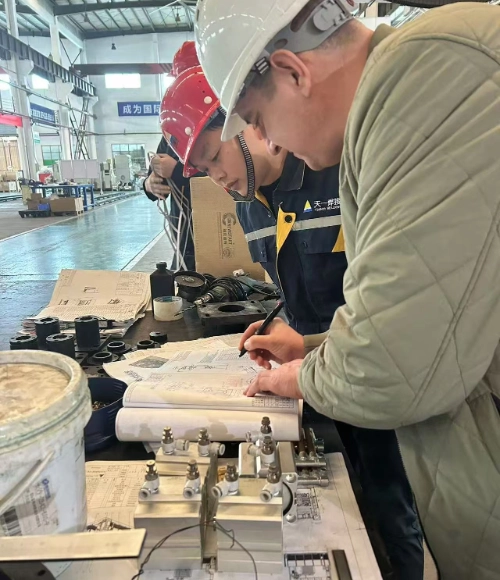
Achieve uniform and aesthetically pleasing formation of the base weld seams, significantly reduce the defect rate of welding, control the welding deformation, and effectively reduce the subsequent processes of correction, grinding and rework.
-
 02
02Automatic Fixture
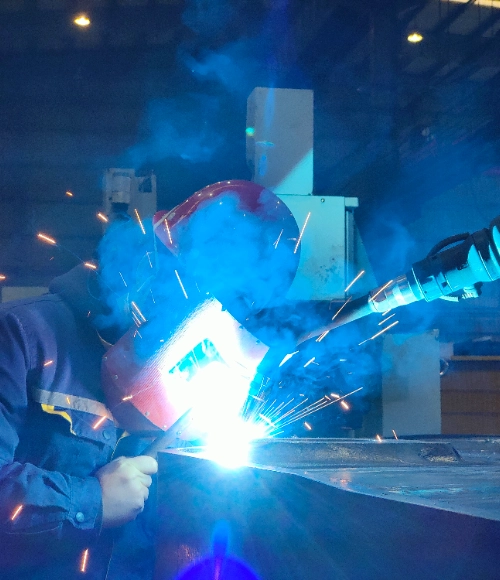
The workstation is equipped with modular dedicated tooling fixtures. It uses high-precision positioning pins and hydraulic clamping structures, ensuring precise positioning and firm clamping.
-
 03
03Modular Design
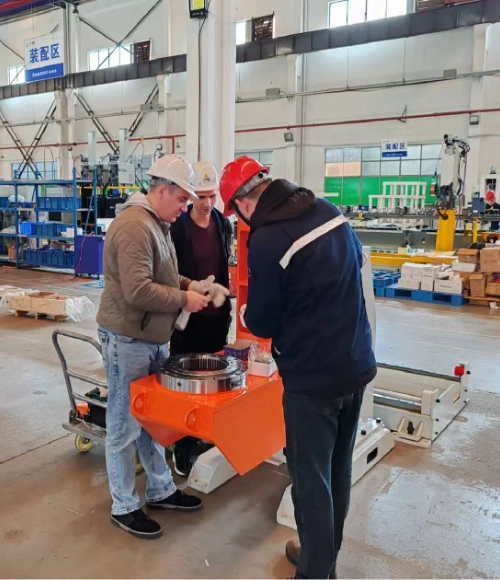
The entire equipment is controlled by a PLC central system, which jointly operates with robots, transfer machines and welding machines.
Overview of the Automated Welding Workstation for the Boom Cylinder Body
The telescopic boom cylinder of the truck-mounted crane is the core load-bearing component of the truck-mounted crane. It mostly adopts high-strength rectangular or circular thin-walled cylinder structures, which are formed by bending high-strength steel plates and then welded together.
-
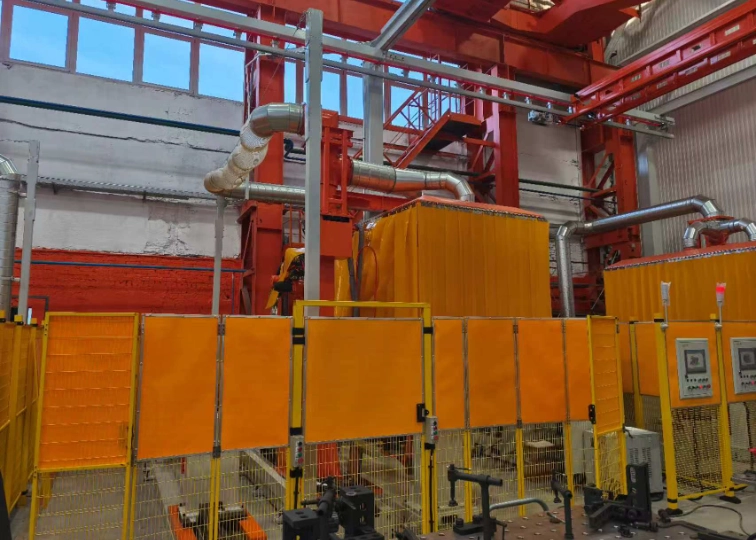
1. Integrated Assembly and Welding Fixture
The layout adopts a collaborative approach of robots and dedicated cylinder wheel frames/servo rotating fixtures, which is different from the structural component box welding process. It is specifically designed for slender tubular workpieces.
-
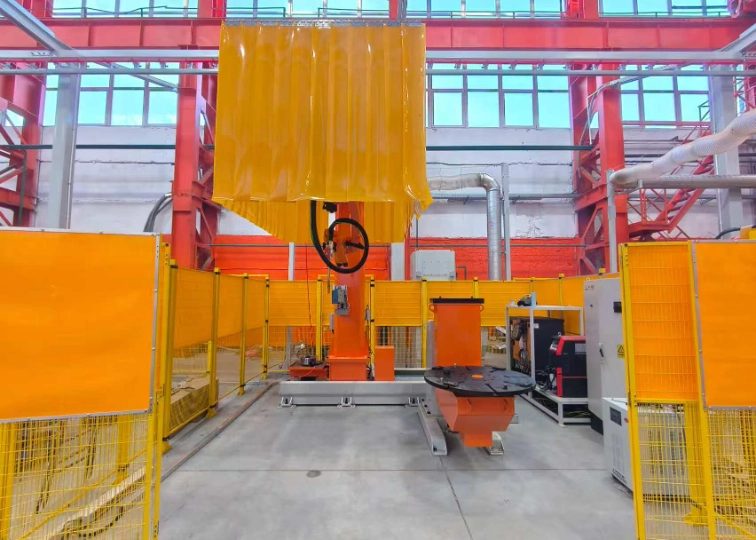
2. Improve production efficiency
The welding efficiency of a single boom cylinder has been increased by over 60%, effectively reducing labor costs and material waste, and completely resolving the issue of unstable welding quality by manual operation.
-
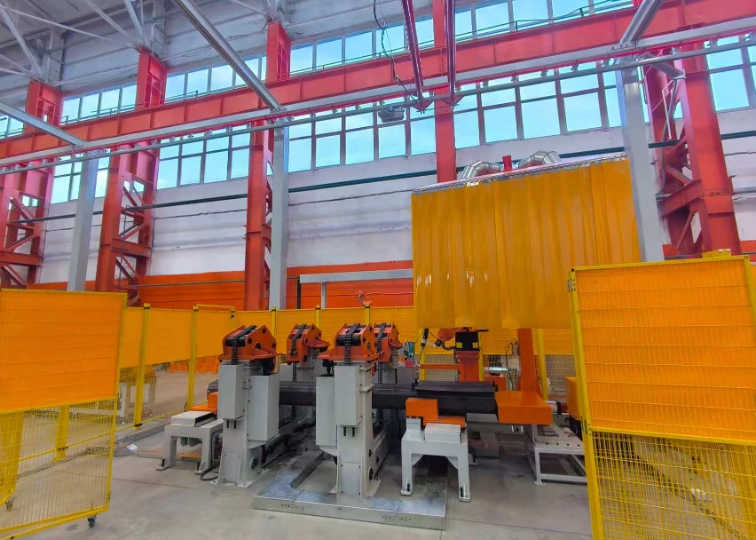
3. Flexible Design
A dedicated intelligent welding equipment specifically designed for the long straight weld seams, circumferential weld seams and end reinforcement weld seams of the telescopic arm cylinder body.
-
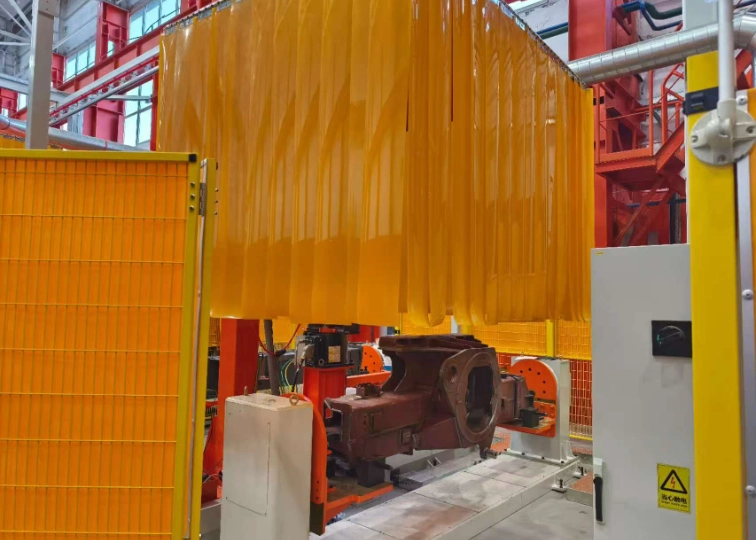
4. Lean Control of Welding Cycle Time
The equipment adopts PLC centralized linkage control to achieve synchronized and coordinated operation of the robot, rotary fixture, welding machine and wire feeding system.
Overview of the Automated Welding Workstation for the Extension and Retraction Support Base of the Vehicle-mounted Crane
The telescopic support base (telescopic leg support base) of the vehicle-mounted crane is the core load-bearing component of the chassis support system of the vehicle-mounted crane. It is mainly composed of a thick plate base, a box-shaped upright plate, an installation plate for the telescopic sleeve, reinforcing ribs, and limit support seats, etc., which are assembled and welded together.
-
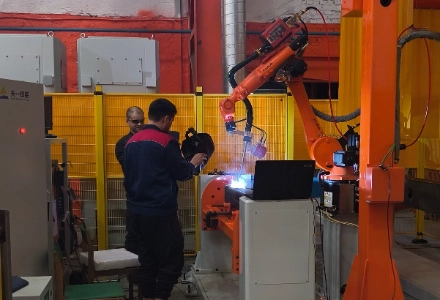
Core advantages of the process
The complex space weld seams have been uniformly adjusted to the optimal welding postures for flat welding and ship-shaped welding, completely solving the industry problem of poor formation of the internal ribs and plates in the support seat.
-
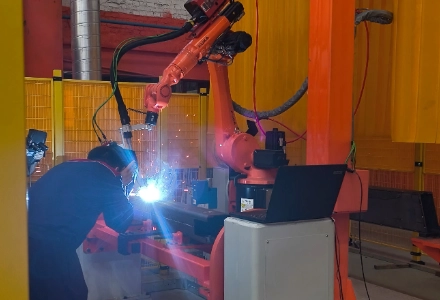
Robotic Welding Station
The production process can call up the welding program with just one click. There is no need to rely on the experience of senior welders. The operation is simple and highly repetitive.
-
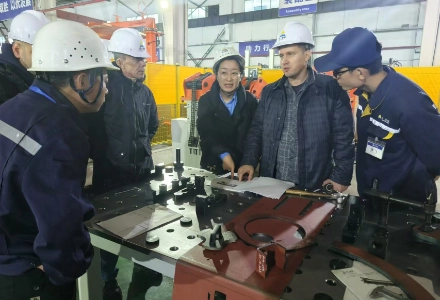
Improve production efficiency
The automated dual-station alternate operation mode effectively eliminates idle time of equipment, and increases production efficiency by more than 50%.
-
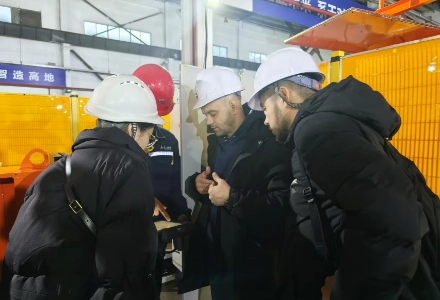
Flexible Platform Design
It can quickly adapt to different specifications of telescopic support bases for model changes, with high efficiency and strong versatility.
The Results We Have Achieved
Established in 1992, Tianyi welding has undergone over 30 years of vigorous development to become a comprehensive service provider spanning the entire welding industry chain, integrating the six key elements of welding quality management: Man, Machine, Material, Method, Environment, and Measurement.
-
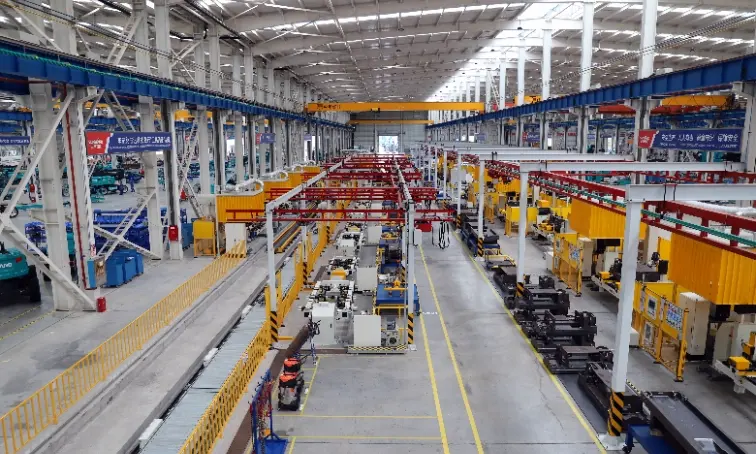
Automated welding production line for the fork and frame of the scissor-type aerial work platform
The automatic welding production line for fork rods and undercarriage frames of medium fork-arm aerial work platforms is the core manufacturing procedure for forming key structural parts of the whole vehicle. It mainly completes cutting...Learn More -
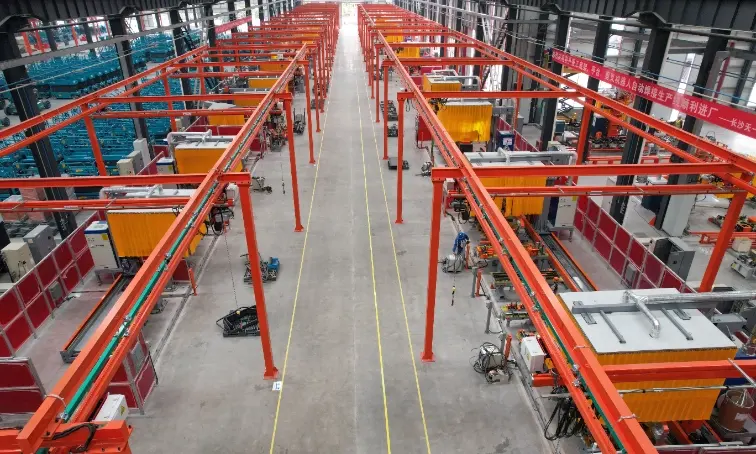
Automated welding production line for aerial work platforms
The welding production line for aerial work platforms (including scissor-type, straight-arm type, and curved-arm type) is the core manufacturing process for forming the entire machine's structural components. It mainly completes the pro...Learn More